
|
|||||
|
|
|||||
|
This week, we stared into the black box of global taxation so that you don’t have to. |
|||||
|
|
|||||
Taxing problemsWe live in an era of extreme inequality. The world’s 10 richest men—and yes, they are all men—own more than the bottom 3.1 billion people. If that weren’t bad enough, avoiding taxes—a key source of government revenue—has become its own industry. Multinational corporations and wealthy individuals are avoiding taxes—often through technically legal means—at an alarming rate. Meanwhile, lower-income countries are struggling to find the revenues needed to provide basic services. High-income countries are pointing to their own revenue challenges to defend aid cuts. One solution for both groups of countries: Close tax loopholes. Doing so would raise hundreds of billions of dollars in revenues annually, as we outline below. — Joe Kraus, Aftershocks Editor 3 things to know1. Countries lose an estimated $492 billion in tax revenue every year to global tax abuse. 71% of that is due to tax abuse by multinational corporations; 29% is lost to offshore tax evasion by wealthy individuals. Why it matters: The tax losses for higher-income countries are greater in absolute terms, but lower-income countries’ losses account for a greater share of their budgets. For example: lower-income countries lose five times as much as higher-income countries as a share of public health budgets. Africa lost an amount equivalent to 53% of health spending between 2016 and 2021 due to corporate tax abuse; that’s nearly 20 points higher than the global average. That means countries have far less money to spend on social services or their energy transitions than they otherwise would. Ultimately, their citizens pay the price. 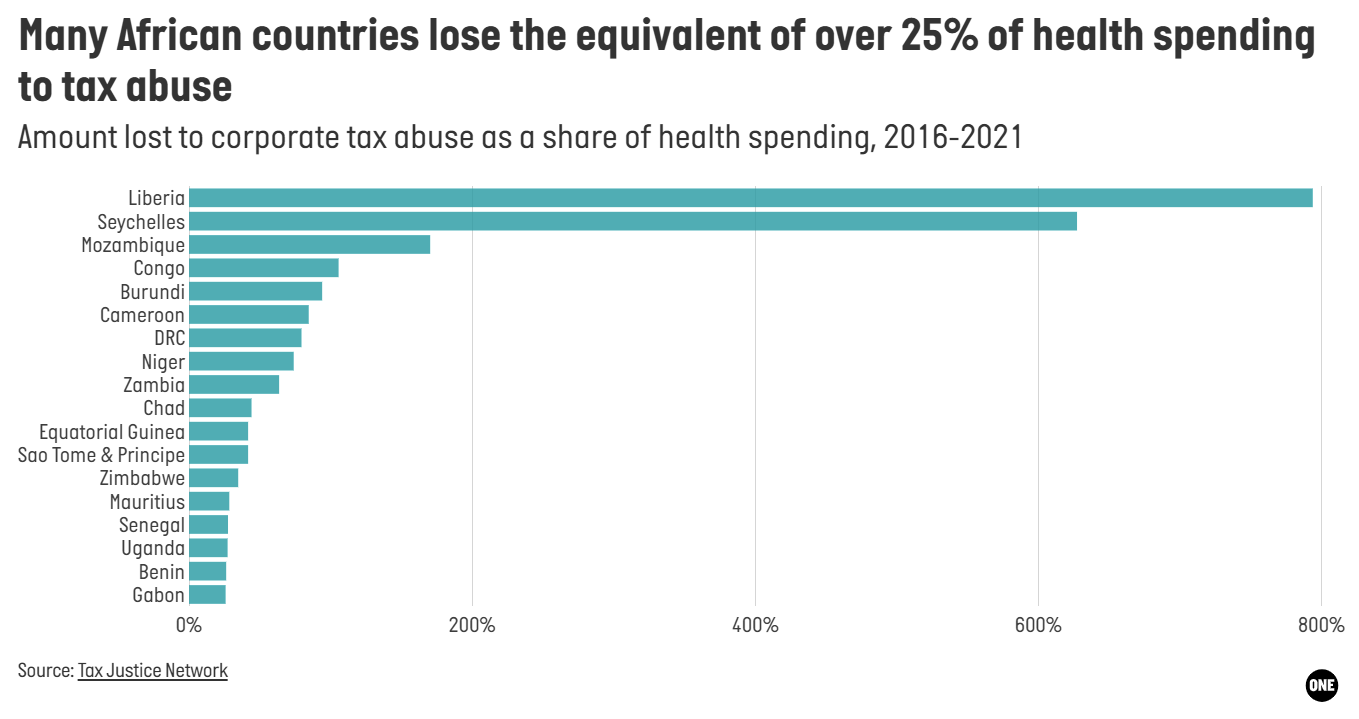 Explore an interactive version of this chart 2. 33 lower-income countries are in—or at high risk of—debt distress. Debt service payments have increased substantially in the past decade, in part due to higher interest payments on private loans. 40% of the world’s population lives in countries that spend more on debt service than health or education. Why it matters: High debt levels are, in part, a result of countries bringing in insufficient revenues. Case in point: Tax policies that favor corporations and the wealthy were a key driver of Sri Lanka’s 2022 debt default and economic crisis. Those policies also contributed to the country’s chronic underfunding of education and other public services. That’s a recurring problem across many lower-income countries trying to meet their debt obligations amidst revenue shortfalls. 3. A handful of countries are to blame for the majority of corporate tax losses. Nearly three quarters of those losses flow into tax havens with low effective tax rates. That includes the UK and its Overseas Territories and Crown Dependencies (which account for 23% of global tax losses), Hong Kong (12.4%), Ireland (9.9%), Singapore (7.8%), and Switzerland (5.4%). For every $1 that corporations shift into tax havens, they avoid paying $5 in taxes, on average, to governments where the actual business activities take place. 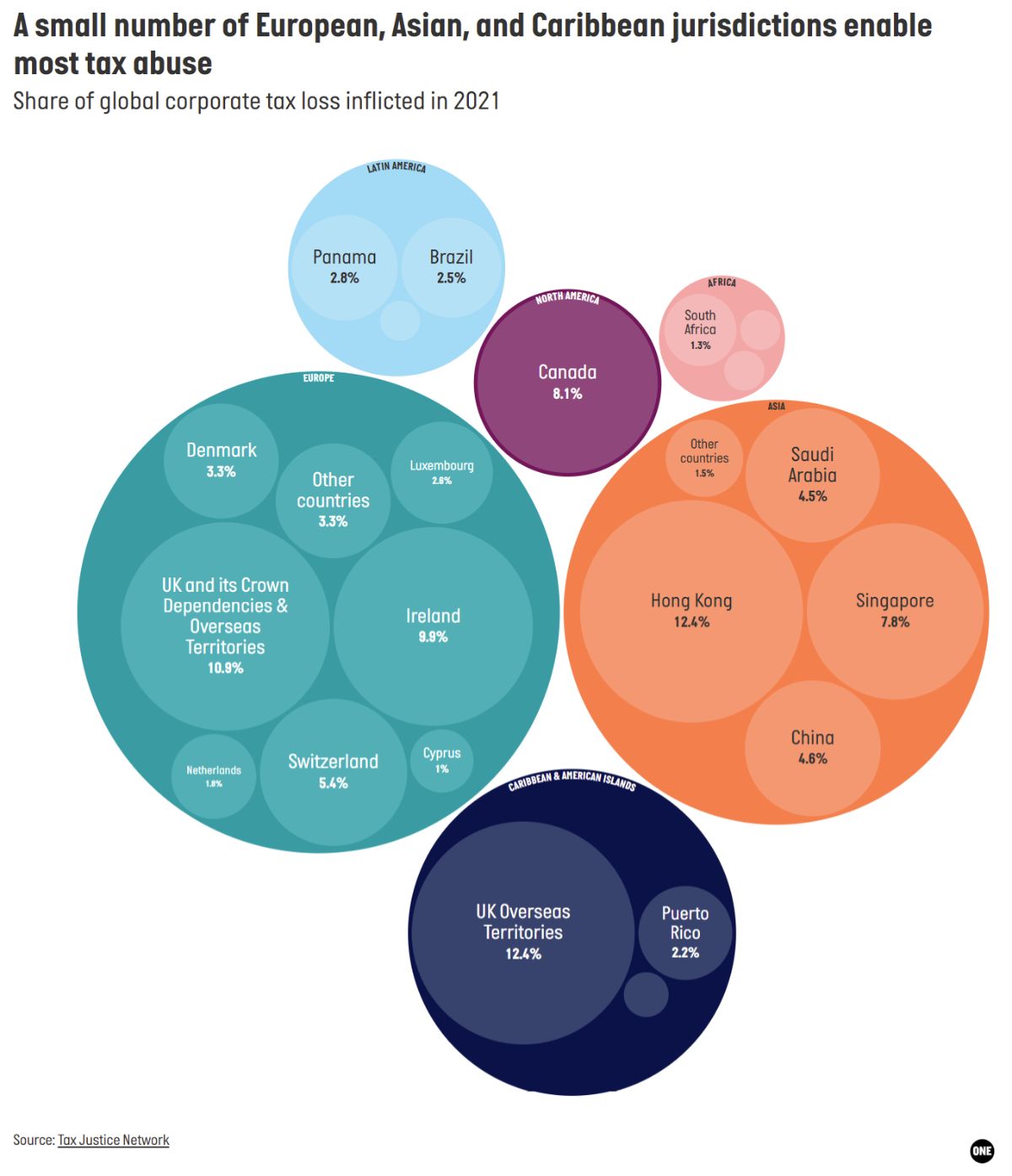 Explore an interactive version of this chart Why it matters: Corporate tax abuse amounts to a massive transfer of wealth from governments to corporations and their shareholders, most of whom live in the world’s wealthiest countries. It has contributed to—and helps perpetuate—historically high levels of inequality. But momentum for reform is growing. The African Group at the UN is leading an effort to establish a UN tax convention to make the global tax system fairer. And efforts to improve transparency of tax payments—a vital first step to tax reform—are gaining steam. 
|
|||||
|
|
|||||
From the ONE Team:
|
|||||
|
|
|||||
In the Queue:
|
|||||
|
|
|||||
|
The ONE Campaign’s ONE Data provides cutting edge data and analysis on the economic, political, and social changes impacting Africa. Check it out HERE. |
|||||
|
|
|||||
Did you like today's email?
Loved it 
Mehhh 
Hated it |
|||||
|
|
|||||
|
|||||
|
This email was sent by ONE.ORG to test@example.com.
You can unsubscribe at any time. ONE Campaign |